Introduction
When a medical emergency happens, getting the right diagnosis quickly can make a major difference. imaging services help emergency medical teams look inside the body and identify injuries, infections, bleeding, fractures, and other conditions that may not be visible from the outside. At ER of Forthworth, diagnostic imaging can support doctors in making informed treatment decisions while patients receive timely emergency care.
Modern emergency care often depends on fast and accurate information. Imaging allows healthcare professionals to understand what is happening inside the body and determine the next appropriate step.
What Are Imaging Services?
Imaging services are medical tests that create pictures of structures inside the body. Doctors use these images to evaluate symptoms, identify injuries, and look for conditions that may require immediate treatment.
Depending on the patient’s symptoms and medical needs, different imaging techniques may be used.
Common types include:
- X-rays
- CT scans
- Ultrasound
- 3D ultrasound
- Other diagnostic imaging techniques when appropriate
Each method has a different purpose. The healthcare team chooses an imaging test based on the patient’s condition, symptoms, medical history, and urgency.
Why Imaging Matters in Emergency Care
Emergency symptoms can sometimes have several possible causes. For example, severe abdominal pain could be related to different conditions, while chest pain may require immediate evaluation for potentially serious problems.
Imaging can give doctors valuable information that physical examinations and laboratory tests alone may not provide.
Key benefits include:
- Faster identification of injuries
- Better understanding of internal conditions
- Support for accurate diagnosis
- Guidance for treatment decisions
- Detection of hidden injuries
- Evaluation of suspected internal bleeding
- Monitoring of certain medical conditions
The goal is not simply to take an image. The goal is to provide useful information that helps the emergency team decide what should happen next.
1. X-Rays for Common Emergency Injuries
X-rays are among the most commonly used diagnostic imaging tools in emergency medicine.
They are especially useful when a patient has experienced an injury involving the bones or joints. A fall, accident, sports injury, or workplace incident can result in a fracture that may not always be obvious during a physical examination.
X-rays can help doctors evaluate:
- Broken bones
- Joint injuries
- Certain chest conditions
- Dislocations
- Bone abnormalities
For example, if someone arrives with severe pain and swelling after falling, an X-ray may help determine whether a fracture is present.
2. CT Scans for Detailed Internal Images
CT scans can provide more detailed images of internal structures than standard X-rays. They can be particularly valuable when emergency doctors need to investigate serious injuries or complex symptoms.
CT imaging may be considered for situations involving:
- Head injuries
- Severe abdominal pain
- Internal bleeding
- Chest problems
- Significant trauma
- Suspected organ injuries
A CT scan combines multiple X-ray images to create detailed cross-sectional views of the body. This can help emergency physicians better understand the location and extent of a problem.
For patients with significant trauma, rapid imaging may provide important information that helps guide treatment.
3. Ultrasound for Quick Evaluation
Ultrasound uses sound waves to create images of structures inside the body. It does not use ionizing radiation and can be useful for evaluating certain soft tissues and organs.
In emergency settings, ultrasound may help assess specific conditions involving:
- The abdomen
- Pelvic structures
- Soft tissues
- Blood flow
- Certain organs
Ultrasound can also be useful when doctors need information quickly and want to evaluate a specific area based on a patient’s symptoms.
4. 3D Ultrasound and Advanced Imaging
Advances in medical imaging have introduced technologies that can provide more detailed visual information in appropriate situations.
3D ultrasound can create three-dimensional images of certain structures. Depending on the clinical situation, this technology may provide additional information beyond traditional two-dimensional ultrasound.
The usefulness of advanced imaging depends on the patient’s symptoms and the type of information doctors need. Not every emergency requires advanced imaging, so healthcare professionals determine which method is appropriate.
5. Imaging After Accidents and Trauma
Car accidents, falls, sports injuries, and workplace accidents can cause injuries that are difficult to identify through an external examination alone.
A person may appear relatively well while still having an internal injury. This is why medical evaluation can be important after significant trauma, particularly when symptoms are severe or worsening.
Imaging can help emergency teams look for:
- Fractures
- Internal injuries
- Head trauma
- Chest injuries
- Abdominal injuries
- Joint damage
The type of imaging depends on the mechanism of injury and the patient’s symptoms.
6. Imaging for Severe Abdominal Pain
Abdominal pain can result from many different conditions. Some are minor, while others may require urgent treatment.
When symptoms are severe, persistent, or accompanied by other warning signs, doctors may use imaging to investigate possible causes.
Depending on the situation, imaging may help evaluate concerns involving:
- The appendix
- Gallbladder
- Kidneys
- Intestines
- Liver
- Other abdominal structures
Imaging is often considered alongside the patient’s symptoms, physical examination, and laboratory results rather than being used as the only source of diagnosis.
7. Imaging for Head and Chest Emergencies
Head and chest symptoms can sometimes require rapid medical evaluation.
After a serious head injury, imaging may help doctors look for certain types of internal injury. Similarly, chest imaging can provide information when patients experience symptoms such as breathing difficulties, chest pain, or injuries caused by trauma.
Emergency physicians consider the patient’s overall condition when deciding whether imaging is necessary.
Symptoms that may require urgent evaluation include:
- Severe chest pain
- Difficulty breathing
- Sudden confusion
- Loss of consciousness
- Severe headache after an injury
- Significant trauma
- Sudden weakness
- Persistent or worsening symptoms
If symptoms are severe or life-threatening, emergency medical care should not be delayed while waiting for symptoms to improve.
How Imaging Supports Faster Emergency Decisions
Emergency medicine often involves making decisions under time pressure. Doctors need reliable information to determine whether a patient can safely go home, needs observation, requires treatment, or should be transferred for specialized care.
Imaging can contribute to this decision-making process.
A typical process may include:
- Initial evaluation: Medical staff review symptoms and vital signs.
- Physical examination: Doctors assess the patient’s condition.
- Imaging decision: The appropriate test is selected when clinically necessary.
- Image review: Qualified healthcare professionals evaluate the results.
- Treatment planning: Findings are considered along with other clinical information.
- Follow-up: Patients receive appropriate instructions based on their condition.
This structured approach helps ensure imaging is used as part of complete emergency care.
What Should Patients Expect During Imaging?
The experience depends on the type of imaging test.
For an X-ray, the patient may need to position the affected body part while images are taken. The process is generally quick.
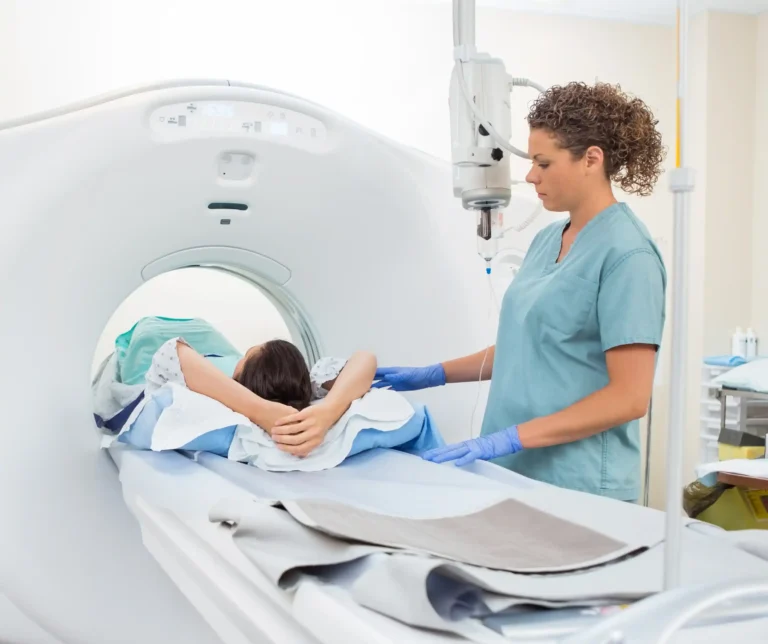
During a CT scan, the patient typically lies on a table that moves through the scanner. Depending on the examination, contrast material may sometimes be used.
During an ultrasound, a healthcare professional usually applies gel to the skin and moves a handheld device across the area being examined.
Patients should tell medical staff about relevant medical conditions, allergies, medications, pregnancy concerns, or previous reactions to contrast material when applicable.
When Should You Seek Emergency Care?
Imaging can be an important part of emergency evaluation, but patients should not try to determine the need for imaging themselves.
Seek emergency medical attention when symptoms are serious, sudden, or worsening, particularly after major trauma.
Examples include:
- Severe or sudden pain
- Difficulty breathing
- Serious injuries
- Heavy bleeding
- Loss of consciousness
- Severe head injury
- Signs of stroke
- Severe abdominal pain
- Sudden weakness or confusion
Emergency professionals can assess the situation and determine whether diagnostic imaging or other tests are appropriate.
Imaging Services at ER of Forthworth
ER of Forthworth focuses on providing emergency evaluation for patients who need timely medical attention. Diagnostic imaging can play an important role when doctors need additional information to understand a patient’s condition.
The appropriate imaging method depends on the emergency. Some patients may need an X-ray, while others may require CT imaging, ultrasound, or another diagnostic approach.
The most important goal is to combine imaging results with symptoms, examination findings, and other diagnostic information to create an appropriate treatment plan.
Frequently Asked Questions
What are imaging services used for?
They are used to create images of structures inside the body. Doctors use these images to help evaluate injuries, illnesses, and other medical concerns.
Which imaging tests are common in emergency care?
Common options include X-rays, CT scans, and ultrasound. The appropriate test depends on the patient’s symptoms and medical condition.
Are imaging tests painful?
Most imaging tests are not painful. However, some procedures may require patients to remain in a certain position or may cause temporary discomfort.
How long does emergency imaging take?
The time varies depending on the type of test and the patient’s condition. Emergency cases are generally prioritized according to medical urgency.
Can imaging detect internal injuries?
Certain imaging tests can help identify internal injuries, bleeding, fractures, and other abnormalities. Doctors determine which test is appropriate based on the situation.
Does every emergency require imaging?
No. Imaging is not necessary for every emergency. Doctors decide whether it is needed after considering symptoms, examination findings, and medical history.
Why is fast imaging important after an accident?
Significant injuries may not always be visible from the outside. Appropriate imaging can provide doctors with additional information about possible internal injuries and help guide treatment.
For more information visit:https://eroffortworthtx.com/services/imaging-services-in-fort-worth/