Planning a Moroccan road trip is an incredible experience. Having your own set of wheels lets you leave the tour buses behind, wind through the High Atlas Mountains, cruise down the Atlantic coast toward Taghazout, and pull over whenever a scenic valley or roadside mint tea stall catches your eye.
However, once you start booking your car, you’ll inevitably run headfirst into one of the most confusing parts of travel logistics: car rental insurance.
Between terms like CDW, Third-Party Liability, Excess, and Franchise, understanding what protection you actually need in Morocco can feel like trying to read a map upside down.
If you want to navigate Moroccan roads with total confidence, here is a straightforward, human guide to how car rental insurance works in the Kingdom.
1. Third-Party Liability (Responsabilité Civile) Is Mandatory
The first thing to know is that you cannot legally drive a rental car in Morocco without Third-Party Liability Insurance. The good news? It is almost always included in the base price of your rental car.
-
What it covers: Damage or injury you cause to other people, vehicles, or property in an accident.
-
What it DOES NOT cover: Any damage to the rental car you are driving, or injuries to you as the driver.
Because it’s built into Moroccan law, you won’t have to negotiate this at the desk—it’s automatically included on your contract.
2. Basic CDW (Collision Damage Waiver) & The “Excess”
When you look at standard rental quotes online, they almost always include basic Collision Damage Waiver (CDW) and Theft Protection (TP).
However, CDW is technically an agreement to waive most of the cost if the car is damaged—it isn’t full protection. It almost always comes with an Excess (often called a Franchise in Morocco).
💥 HOW THE EXCESS (FRANCHISE) WORKS:
• Your rental car suffers $2,000 in damage in a parking lot.
• Your contract's Excess is $1,000 (€1,000 / ~10,000 MAD).
• You pay the first $1,000 out of your pocket (or security deposit hold).
• The insurance company covers the remaining $1,000.
The Excess amount is what determines the size of the security deposit hold placed on your credit card at pickup.
3. Super CDW / Full Protection (Zero Excess)
If holding $1,000 to $1,500 on your credit card sounds nerve-wracking, you can opt for Super CDW (sometimes sold as “Full Protection” or “Zero Excess”).
-
What it does: It reduces your financial liability (and your credit card deposit hold) down to zero (or a nominal amount like $50–$100).
-
How to buy it: You can add it online when booking, or purchase it directly at the rental desk upon arrival.
-
The Benefit: If you get a scratch on a narrow alleyway or a chip in the windshield, you simply hand over the keys at drop-off without losing your deposit.
4. Does Your Travel Credit Card Cover You in Morocco?
Many savvy travelers rely on the built-in primary or secondary Auto Rental Collision Damage Waiver provided by premium credit cards (like Chase Sapphire or Capital One Venture).
While credit card coverage is fantastic and can save you $15 to $30 a day, you must exercise caution in Morocco:
-
Check Exclusions: Some credit card issuers explicitly exclude certain countries from their auto rental coverage list. Call your bank before your flight to confirm that Morocco is 100% covered.
-
Decline Counter CDW: To activate credit card coverage, you must pay for the full rental with that specific card and explicitly decline the rental agency’s optional Super CDW / Collision coverage.
-
Be Prepared for the Deposit Hold: When you rely on card coverage, the local Moroccan agency will still place a full security deposit hold ($800–$1,500) on your card at pickup. If damage occurs, the agency charges your card, and you seek reimbursement from your credit card company later.
5. Exclusions to Keep in Mind
Even if you purchase “Full Protection” or Super CDW, rental insurance policies in Morocco routinely exclude specific parts of the vehicle unless you purchase specialized add-ons:
-
Tires and Glass: Punctures from mountain gravel roads or cracked windshields are often excluded from basic CDW.
-
Undercarriage & Roof: Damage caused by taking a standard sedan off-road into unpaved riverbeds or desert dunes will void your insurance completely.
-
Lost Keys or Interior Damage: Spills, torn upholstery, or dropping the key fob in the ocean are never covered by collision waivers.
6. The Golden Rule: Always Get a Constat Amiable (Police Report)
Here is the single most important rule for driving a rental car in Morocco: If you get into an accident, you MUST complete an official police report or a Constat Amiable (Friendly Accident Statement).
In Morocco, insurance claims cannot be processed without official documentation. If another vehicle scratches your bumper and you drive away without filling out a joint Constat Amiable form (which is located in the glovebox) or calling the traffic police (Sûreté Nationale in cities, Gendarmerie Royale on highways), your insurance coverage will be declared void, and you will be held 100% financially liable for the repairs.
Quick Summary Before You Drive Off
-
Base Rate: Includes Third-Party Liability and basic CDW with a high deposit/excess.
-
For Stress-Free Travel: Buy Super CDW (Zero Excess) to eliminate high card holds and out-of-pocket risks.
-
Using Credit Card Insurance? Confirm Morocco coverage in writing before you land and bring a physical credit card with plenty of available credit limit.
-
In Case of Incident: Always document the damage and complete a Constat Amiable before leaving the scene.
Understanding these few rules ensures that your Moroccan road trip remains filled with incredible mountain vistas, vibrant souks, and coastal sunsets—completely free of insurance surprises!
Renting a car is one of the best ways to explore Morocco. From the sunny beaches of Agadir to the winding roads of the Atlas Mountains and the charming coastal towns along the Atlantic, having your own vehicle gives you the freedom to travel wherever your adventure takes you.
Before you get behind the wheel, however, there’s one important topic every traveler should understand: car rental insurance.
Many first-time visitors are unsure about what is included in their rental, what additional protection is available, or whether they really need extra coverage. The good news is that car rental insurance doesn’t have to be confusing. Once you understand the basics, choosing the right level of protection becomes much easier.
This guide explains how car rental insurance works in Morocco and what you should know before booking your vehicle.
Why Is Car Rental Insurance Important?
Even if you’re an experienced driver, unexpected situations can happen.
Road conditions, unfamiliar traffic rules, weather changes, or simple parking accidents are all possibilities when driving in a new country.
Car rental insurance is designed to help reduce financial risk if something unexpected occurs during your rental period.
More importantly, it gives you greater peace of mind, allowing you to focus on enjoying your trip rather than worrying about every kilometer you drive.
Is Insurance Included in the Rental Price?
In many cases, yes.
Most rental companies include a basic level of insurance with the rental price. However, the exact coverage varies depending on the company and the type of booking.
Before confirming your reservation, it’s important to understand:
- What protection is included.
- Whether there is a deductible (also called an excess).
- Which situations are covered.
- Which situations are excluded.
Reading these details before your trip helps you make informed decisions.
Common Types of Car Rental Insurance
Although policies vary between rental companies, you’ll often encounter several common types of protection.
Collision Damage Coverage
This type of coverage helps reduce your financial responsibility if the rental vehicle is damaged in a covered incident.
However, many policies still include a deductible, meaning you may remain responsible for part of the repair costs depending on the rental agreement.
Always check the specific conditions with your rental company.
Theft Protection
Theft protection is designed to provide coverage if the rental vehicle is stolen, subject to the conditions outlined in the rental agreement.
As with collision coverage, certain exclusions and responsibilities may apply.
Understanding these conditions before you travel is always recommended.
Third-Party Liability
This type of insurance is intended to provide protection if you are legally responsible for damage to another person’s property or injuries to others while driving the rental vehicle.
The exact level of coverage depends on the rental company’s policy and local regulations.
Personal Accident Coverage
Some rental companies also offer optional protection for medical expenses related to the driver and passengers following an accident.
Whether this coverage is necessary depends on your existing travel or personal insurance.
What Is a Deductible?
One of the most misunderstood parts of rental insurance is the deductible, sometimes called the excess.
A deductible is the amount that may remain your responsibility if the vehicle is damaged under circumstances covered by the agreement.
The exact amount varies between rental companies and insurance packages.
Before booking, ask:
- Is there a deductible?
- How much is it?
- Can it be reduced?
- Under what conditions does it apply?
Knowing the answers helps you compare rental offers more effectively.
Optional Insurance Upgrades
Many rental companies offer additional insurance options that provide broader protection than the standard coverage.
Depending on the provider, these upgrades may help reduce or eliminate the deductible or extend protection to specific parts of the vehicle.
Whether you choose additional coverage depends on:
- Your driving confidence.
- Your travel plans.
- Your existing insurance.
- Your personal comfort level.
There’s no universal answer—it’s about selecting the option that best suits your needs.
Always Read the Rental Agreement
Before collecting your vehicle, take a few minutes to review the rental agreement carefully.
Pay particular attention to:
- Insurance coverage.
- Deductible information.
- Fuel policy.
- Driver requirements.
- Mileage limits.
- Return conditions.
Understanding these details before you drive away can help prevent misunderstandings later.
Inspect the Vehicle Before Leaving
Insurance works best when the condition of the vehicle is clearly documented.
Before leaving the rental location:
- Walk around the vehicle.
- Check for scratches or dents.
- Inspect the windshield and tires.
- Test the lights.
- Take photos from several angles.
- Make sure any existing damage is recorded.
This simple habit protects both you and the rental company.
Safe Driving Helps Avoid Problems
Insurance is there for unexpected situations, but careful driving is still your best protection.
When driving in Morocco:
- Respect local speed limits.
- Wear your seat belt.
- Avoid using your phone while driving.
- Stay alert in busy city traffic.
- Drive cautiously on unfamiliar roads.
A calm and responsible driving style makes every journey safer and more enjoyable.
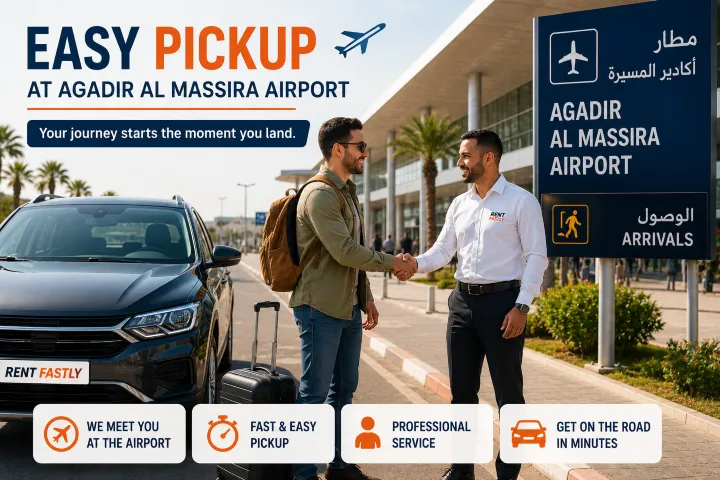
Picking Up Your Rental Car at the Airport
Many visitors collect their vehicle directly from Agadir–Al Massira Airport.
Airport pickup offers several advantages:
- A convenient start to your trip.
- No need to arrange taxis or transfers.
- Immediate access to your vehicle.
- More time to explore.
During pickup, the rental agent will usually explain the insurance included with your booking and answer any questions before handing over the keys.
Don’t hesitate to ask for clarification if anything is unclear.
Explore Morocco with Confidence
Once you’re on the road, you’ll have the freedom to discover some of the most beautiful destinations in southern Morocco.
Popular day trips from Agadir include:
- Taghazout, famous for its surf beaches and relaxed atmosphere.
- Paradise Valley, known for hiking trails and natural swimming pools.
- Taroudant, where visitors can experience traditional Moroccan culture.
- Tiznit, renowned for its silver craftsmanship.
- Essaouira, perfect for a scenic coastal drive.
Having the right insurance allows you to enjoy these journeys with greater confidence.
Questions to Ask Before Booking
Before confirming your reservation, consider asking the rental company:
- What insurance is included?
- Is there a deductible?
- Can the deductible be reduced?
- Does the coverage include theft protection?
- Are tires, glass, and windshields covered?
- Is roadside assistance included?
- What should I do if an accident occurs?
Getting clear answers in advance helps you avoid confusion later.
Final Thoughts
Understanding how car rental insurance works in Morocco is one of the best ways to prepare for a smooth and enjoyable trip. While insurance terms may seem complicated at first, they become much easier to understand once you know what to look for.
Instead of focusing only on the rental price, take time to review the insurance coverage, deductible, and rental conditions before making your booking. A transparent rental agreement and clear explanations from the rental company are just as important as finding a competitive price.
Whether you’re driving along Agadir’s coastline, visiting the surfing village of Taghazout, exploring the natural beauty of Paradise Valley, or discovering the historic charm of Taroudant and Essaouira, having the right insurance means you can enjoy every journey with greater confidence and peace of mind.
A well-informed traveler is a more relaxed traveler—and that’s the best way to experience everything Morocco has to offer. If you search for some car to hire in agadir, we recommand you to look for our agency : car rental agadir airport Morocco.
Company Profile : Rent fastly
Company information
Company name : Rent fastly
Address :
- Street Number and Name : Aéroport Al Massira
- City : Agadir
- Postal Code: 86603
- Country : Morocco
Phone :+212663077524
Email Address : booking@rentalcaragadir.ma