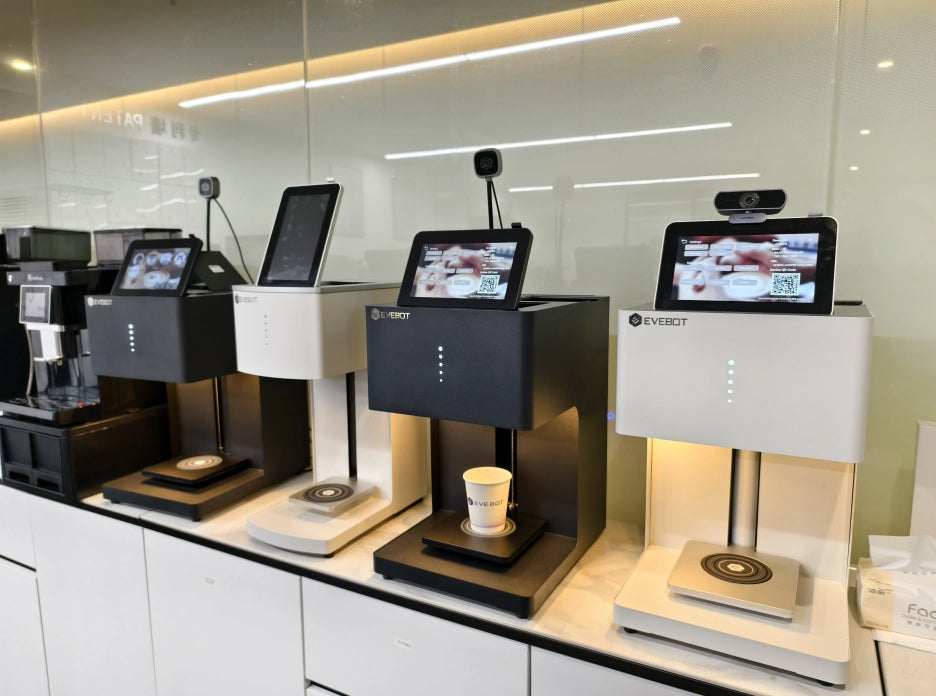
Walk into almost any trendy café these days and you might spot something unusual sitting on top of a latte. A face. A logo. A tiny cartoon. It’s not a trick of the light. It’s a machine doing exactly what it was built to do, and once you understand how it works, the whole thing stops feeling like magic and starts feeling like smart business. Whether you’re serving lattes, cappuccinos, or desserts, a Coffee Art Printer transforms ordinary drinks into personalized creations that customers love to photograph and share.
What Is a Coffee Printer?
A coffee printer is a small desktop printer that sprays a food-grade ink on top of the foam of a drink or the surface of a dessert. You pick up an image, set the cup and your design is on in seconds.
Most of these are milk-based machines, including drinks, cakes, cookies and even yogurt. The ink is edible—there’s no fake stuff on top of your soup that shouldn’t be there.
How Coffee Art Printing Works
The process behind coffee art printing is simpler than people expect. A sensor measures the height and shape of the cup, then controls the print head to move across the foam and to apply the ink in the exact pattern of the uploaded image.
There’s no stencil involved and no steady hand required. Typically, the photo is uploaded over WiFi, sometimes by scanning a QR Code off the staff’s smartphone, and the machine does the rest without any additional software installed anywhere.
Benefits of Using a Coffee Printer
The first and most apparent one is presentation. A plain cup suddenly becomes something worth photographing, and customers tend to share that photo online without being asked. No extra cost per cup and the opportunity for free exposure.
There’s also the speed factor. Each machine takes 5-15 seconds to print a design, causing only minimal service delays during peak times. For a business, that’s a marketing tool that doesn’t interrupt the flow of a normal shift.
Why Print Quality Matters
There are different levels of precision from machine to machine, and this is where resolution comes into account. A 600 DPI coffee printer prints images in much better quality than a less expensive, lower-resolution coffee printer can, and can produce fine lines, shading, and smaller writing.
This is especially important for photos like selfies or complex logos where detail is crucial, as low resolution can result in loss of facial details or sharp logo edges. Anyone printing detailed artwork regularly should treat resolution as a non-negotiable spec, not an afterthought.
Best Uses for Coffee Printing
Cafés are the obvious home for this technology, but they’re far from the only one. It is used in hotels to greet their guests in a personalized way, and in event planning to place company logos on products during conferences or product launches.
Restaurants have also become more creative, printing designs on desserts, cocktails and even beer froth. Basically, anywhere a business wants a small, memorable detail, this kind of machine tends to fit right in.
Things to Consider Before Buying
The first thought you need to consider before purchasing a machine is your daily volume. Depending on the café, a small handheld device may be adequate, while a fast-busy establishment will require a piece capable of fast, uninterrupted output throughout the day.
You should also consider the number of prints from ink cartridges because the less expensive ones will run out faster than those with an 800 to 1000 cups capacity. The warranty period is also important, and two years can be considered an industry norm.
Choosing Between Machine Types
Using a handheld does not mean using a desktop; it all depends on how you operate in your business. If you have smaller counters or even a one-day pop-up, you can make use of a handheld device to carry out your work.
A fully functional desktop Evebot Coffee Printer Machine would be suitable for firms printing tens or even hundreds of cups per day. The standard size of such a machine is a touchscreen control with an area of 4 to 10 cm.
Common Mistakes to Avoid
People often think that any inkjet printer can be used for food use. Standard printing ink is not safe for consumption, so businesses should always invest in a certified **Coffee Art Printer that uses edible, food-grade ink specifically designed for beverages and desserts.
Another error is overlooking the foam quality. No matter how good the Coffee Art Printer is, it can’t produce a clean print if the foam is too thin or uneven, so the milk texture is just as important as the printer.
Conclusion
Coffee printing has become much more than a novelty. For companies that are looking to achieve high-quality prints, the 600 Dpi Coffee Printer is the best choice for its sharp and detailed prints, which will make your presentations look great.
The Evebot Coffee Printer Machine, on the other hand, is a good choice for cafes or restaurants that receive many customers every day. If you are looking at buying a Coffee Art Printer for your company, then you will have to choose the right machine for your needs.
Brands like EVEBOT have built entire product lines around this exact idea, and it’s worth exploring what fits your business best.
Frequently Asked Questions
Can a coffee printer really print a photo of a face?
Yes, as long as the resolution is high enough. Machines with 600 DPI or better can capture facial detail clearly, while lower-resolution models tend to blur fine features.
Is the ink used in these machines safe to drink?
Yes, certified machines use edible ink for food products, made specifically for direct contact with drinks and desserts. Different from conventional printing ink, it is created by a series of tests for food safety before it goes to market.
How long does one ink cartridge usually last?
Depending on image size and how much ink coverage each design demands, most cartridges can be used for 800 – 1,000 cups before they need replacing.
Do I need special software to upload designs?
Not usually. Images can be uploaded without additional apps in many machines via a QR code or a straightforward link from the phone and a WiFi connection.