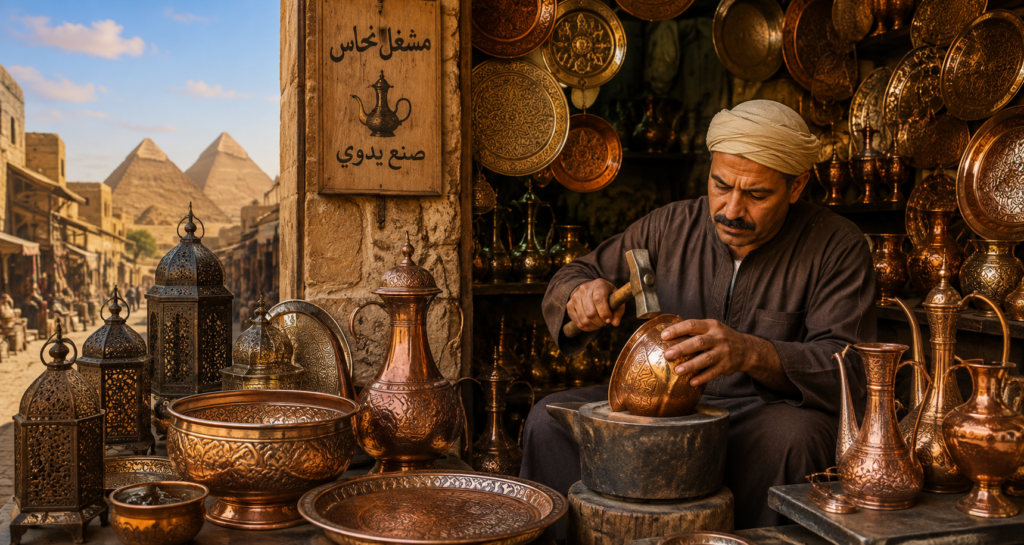
Stepping into the winding alleyways of Cairo feels like walking straight into a living museum, where the air hums with the steady, rhythmic clink-clink-clink of hammers hitting metal. While Egypt is world-famous for its ancient pharaonic monuments, its living medieval heritage—specifically the centuries-old copper and metal craft workshops—offers an equally mesmerizing experience for travelers.
The Heart of the Craft: Khan el-Khalili and Al-Muizz Street
When you search for authentic metal craft in Egypt, your journey will inevitably lead you to Khan el-Khalili and the surrounding historic district of Islamic Cairo, particularly near Bab Zuweila and Al-Muizz Street. Operating since the 14th century, these labyrinthine markets are home to generations of master craftsmen, known locally as muallimeen. Unlike mass-produced souvenirs found in generic gift shops, the workshops hidden behind these market stalls create functional art using techniques that have remained virtually unchanged for hundreds of years.What Makes Egyptian Metalwork Unique?
Egyptian metal artisans specialize in several distinct techniques that require immense patience and precision:- Inlaying and Damascene Work: Artisans skillfully hammer silver, gold, or copper wires into engraved grooves on brass or bronze surfaces to create intricate geometric patterns and Arabic calligraphy.
- Repoussé and Chasing: Craftsmen hammer metal sheets from the reverse side to form raised relief designs, adding fine surface details from the front.
- Hand-Pierced Lanterns (Fanous): The iconic Egyptian Ramadan lanterns and decorative lamps are meticulously cut out by hand, piece by piece, before being soldered together and fitted with colored glass.
Why Visit a Traditional Metal Workshop?
Witnessing a master artisan at work offers a profound connection to Egyptian culture that goes beyond sightseeing. Here is why you should carve out time in your itinerary for a workshop visit:- Support Local Heritage: Buying directly from independent workshops helps sustain traditional artistry and supports local families who have preserved these skills through generations.
- Custom Souvenirs: Many workshops allow you to watch your item being personalized. You can even request custom brass trays or copper plates engraved with your name in Arabic calligraphy.
- Photography and Storytelling: The play of light reflecting off polished copper surfaces inside dimly lit, tool-lined medieval workshops provides some of the most striking photography opportunities in Cairo.
Practical Tips for Travelers Visiting Cairo’s Craft Markets
Planning a trip to immerse yourself in Egypt’s artisan culture requires a little preparation. To ensure your journey is seamless, keep these helpful tips in mind:- Best Time to Visit: Head to the markets in the morning around 10:00 AM when the workshops are fully active and the streets are less crowded.
- Bargaining Etiquette: Polite bargaining is a standard part of shopping in traditional Egyptian markets. Approach it as a friendly conversation rather than a confrontation, keeping respect for the artisan’s labor at the forefront.
- Shipping Large Items: Many reputable copper workshops offer international shipping services if you fall in love with large decorative trays, heavy brass tables, or oversized hanging lanterns.