In today’s rapidly evolving workplace, a maternity leave letter is no longer just a formal notification—it is a thoughtfully crafted document that bridges personal transformation with professional continuity. It captures a pivotal life moment while reinforcing a woman’s commitment to her role, her team, and her long-term career trajectory.
Maternity leave represents a crucial phase when a woman steps away from work due to pregnancy and childbirth. Yet, this pause is far from passive. It is a period of preparation, recovery, and bonding—one that demands both emotional presence and strategic planning.
Policy Framework: Where Rights Meet Reality
India’s progressive extension of maternity leave to 26 weeks under the Maternity Benefit Act has been remarkably transformative. It reflects a growing recognition that supporting motherhood is not just a social responsibility but also a business imperative.
Organizations, increasingly aware of this dynamic, are aligning their policies to foster inclusivity. By integrating statutory benefits with internal support systems, they are building environments where maternity is respected, not sidelined.
Within this framework, the maternity leave letter becomes the first formal step—connecting policy with execution.
Why a Maternity Leave Letter Is More Than a Formality
A well-written maternity leave letter does more than inform—it reassures. It demonstrates clarity, accountability, and foresight, all of which are critical in maintaining professional credibility during an extended absence.
Imagine it as a carefully engineered handover. On one end lies your current responsibilities; on the other, a structured plan ensuring continuity. The maternity leave letter, when written effectively, holds this entire transition together.
By clearly outlining leave dates, expected return timelines, and delegation strategies, it becomes a remarkably effective communication tool.
Crafting a High-Impact Maternity Leave Letter
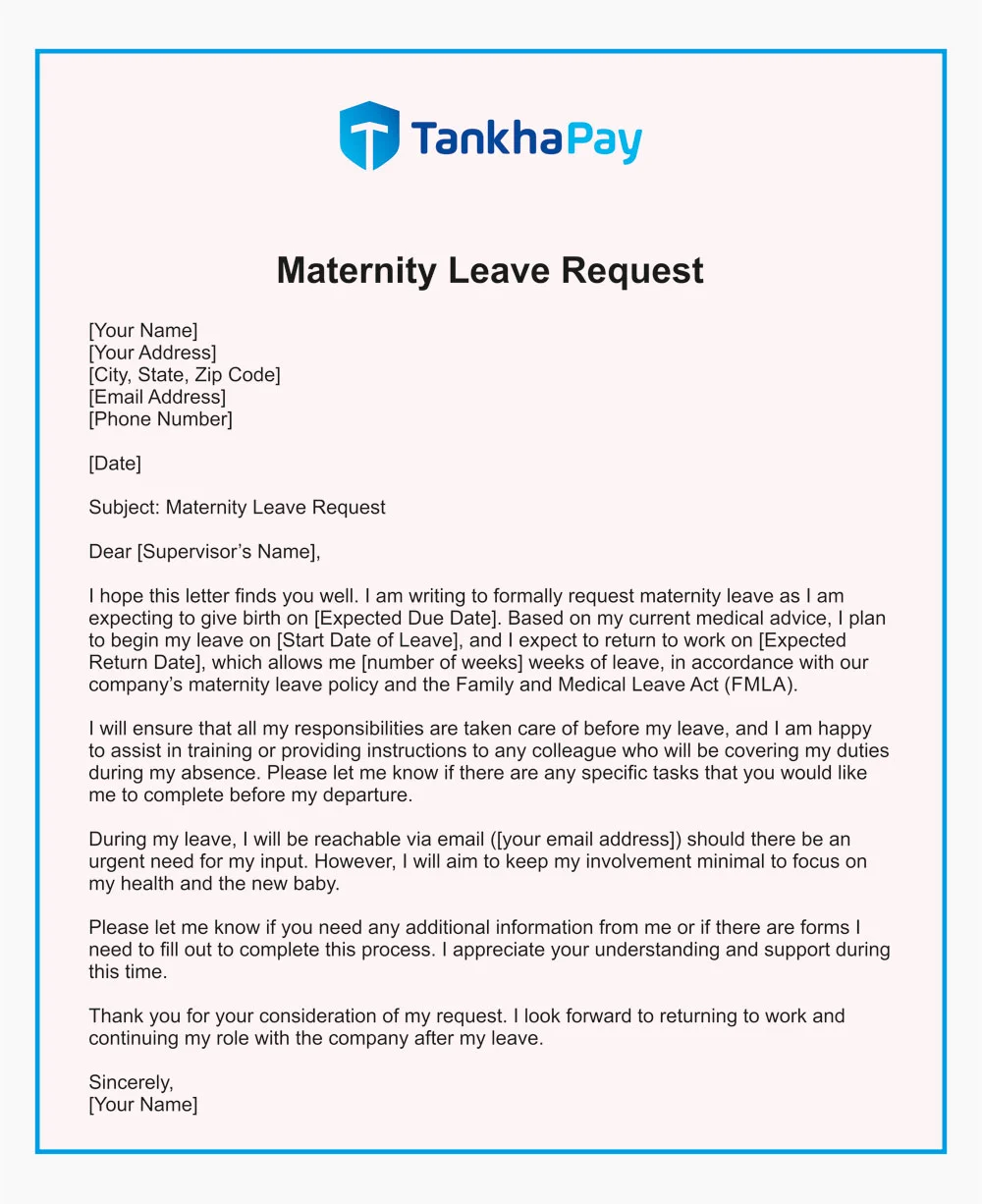
A strong maternity leave letter blends precision with professionalism. It is concise, yet comprehensive—formal, yet empathetic.
Key elements include:
- A clear subject line stating the purpose
- Exact leave duration aligned with medical advice
- Expected due date (if applicable)
- A detailed plan for task delegation
- Communication preferences during leave
- Supporting medical documentation
Each element plays a role in creating a coherent narrative—one that reassures employers while safeguarding personal boundaries.
Planning Ahead: The Hidden Power of Preparation
Behind every effective maternity leave letter lies thoughtful planning. Without preparation, even the most well-written request can fall short.
Financial readiness, workload distribution, and early coordination with HR are essential. By proactively addressing these areas, expecting mothers can transition smoothly into maternity leave—free from unnecessary stress.
This level of preparedness is not just practical; it is strategically empowering in a competitive professional landscape.
Communication During Leave: Finding the Right Balance
Maintaining a connection with the workplace during maternity leave requires nuance. While some professionals prefer minimal engagement, others opt for periodic check-ins.
A clearly defined communication plan within the maternity leave letter helps set expectations. Whether it involves limited email access or emergency-only calls, this clarity prevents misunderstandings and supports a healthier work-life balance.
Expanding the Perspective: Inclusion and Progress
The evolution of maternity leave policies signals a broader shift toward workplace equality. Today, benefits extend beyond biological mothers to include adoptive and surrogate parents, reflecting a more inclusive understanding of parenthood.
This inclusivity, gradually embedded into corporate culture, positions the maternity leave letter as more than a document—it becomes a symbol of rights, dignity, and progress.
Employer’s Lens: Stability Through Structure
For employers, maternity leave presents a moment of adjustment. However, a well-structured maternity leave letter significantly reduces uncertainty by outlining clear plans and expectations.
Organizations that support such transitions often experience stronger employee loyalty and retention. In fact, companies embracing progressive maternity policies are increasingly seen as forward-thinking and employee-centric.
Future of the Maternity Leave Letter
As workplaces become more digital and flexible, the maternity leave letter is also evolving. AI-powered HR systems, remote work models, and flexible schedules are reshaping how leave is managed.
By integrating these innovations, organizations can create systems that are both efficient and empathetic—ensuring that maternity leave is seamlessly aligned with modern work dynamics.
Conclusion: A Letter That Shapes a Life Transition
At its essence, a maternity leave letter is more than a request—it is a professional statement during a deeply personal milestone. It reflects preparedness, responsibility, and resilience, all while honoring the transformative journey of motherhood.
When crafted thoughtfully, it empowers women to step into this new chapter with confidence—secure in the knowledge that their professional identity remains intact.
In a world driven by productivity, the maternity leave letter stands as a powerful reminder that true progress lies in supporting life beyond the workplace.