Market Overview:
According to IMARC Group’s latest research publication, “Animal Feed Market: Global Industry Trends, Share, Size, Growth, Opportunity and Forecast 2026-2034”, The global animal feed market size reached USD 548.1 Billion in 2025. Looking forward, IMARC Group estimates the market to reach USD 699.0 Billion by 2034, exhibiting a CAGR of 2.70% from 2026-2034.
This detailed analysis primarily encompasses industry size, business trends, market share, key growth factors, and regional forecasts. The report offers a comprehensive overview and integrates research findings, market assessments, and data from different sources. It also includes pivotal market dynamics like drivers and challenges, while also highlighting growth opportunities, financial insights, technological improvements, emerging trends, and innovations. Besides this, the report provides regional market evaluation, along with a competitive landscape analysis.
How AI is Reshaping the Future of the Animal Feed Market
- AI-powered feed formulation tools are improving nutrient bioavailability and feed conversion ratios by enabling precision nutrient delivery, reducing the overuse of antibiotics, and optimizing ration planning across poultry, swine, and ruminant operations at scale.
- In 2024, Kemin Industries launched FORMYL, an advanced feed acidifier for swine health in the US, combining encapsulated calcium formate and citric acid for targeted gastrointestinal delivery, offering a non-antibiotic approach to managing Enterobacteriaceae and Escherichia coli challenges.
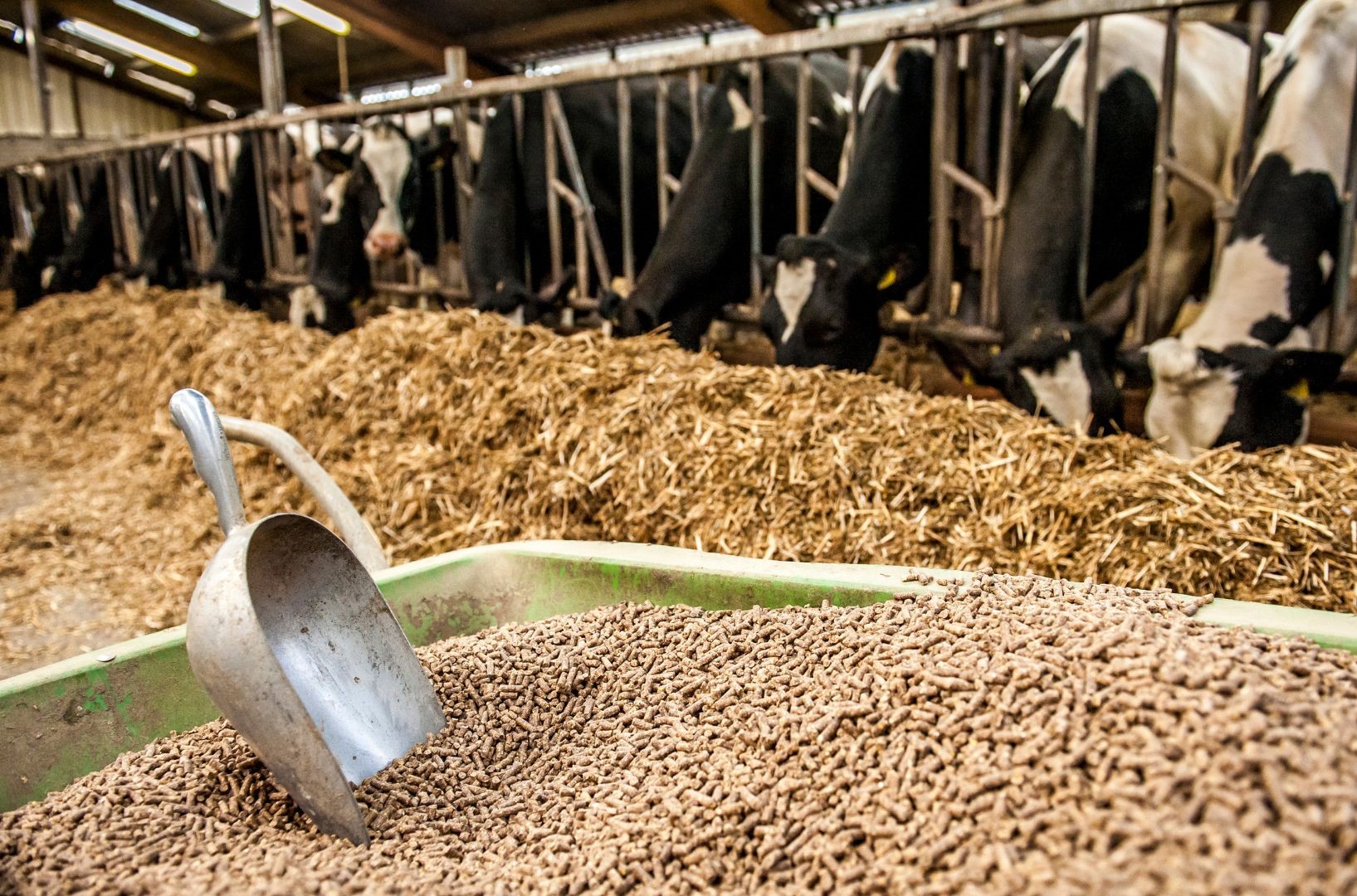
- Microencapsulation and cold pelleting technologies powered by AI-assisted formulation are enhancing feed durability during transport and feeding, supporting the dominant pellet segment which leads the market due to consistent nutrient distribution and reduced feed wastage.
- In 2025, demand for natural feed additives including probiotics, enzymes, and phytogenics accelerated due to regulatory pressure to reduce antibiotic growth promoters in livestock production, particularly in poultry and dairy sectors across North America and Europe.
- In 2024, a cutting-edge animal feed facility with a daily production capacity of 800 metric tons was launched in Gujarat for Rs 210 crore, combining advancements in milk production, natural farming, and sustainable feed methods to assist farmers across rural India.
Download a sample PDF of this report: https://www.imarcgroup.com/animal-feed-market/requestsample
Key Trends in the Animal Feed Market
- Population Growth Driving Protein Demand: The global population grew from 2.5 billion in 1950 to 8 billion by 2022, with projections pointing toward 9.7 billion by 2050, significantly increasing global demand for meat, dairy, and eggs. This sustained growth places animal nutrition at the center of food security strategy and incentivizes continued innovation in balanced, cost-effective feed formulations for producers of all scales.
- Sustainable and Eco-Friendly Feed Solutions: Growing environmental concerns are pushing manufacturers toward feed additives that reduce methane emissions and support greener livestock farming. In May 2024, Elanco Animal Health received US FDA approval for Bovaer, a novel feed supplement for lactating dairy cows that reduces methane emissions by approximately 30%, marking a significant milestone in sustainable livestock feed development.
- Regulatory Push Toward Antibiotic-Free Additives: Regulatory frameworks across the US, EU, and Asia Pacific are tightening standards around the use of antibiotics in animal feed. This is accelerating the adoption of functional alternatives such as probiotics, organic trace minerals, and fermentation-derived bioactives, with technological additives now accounting for 40% of the feed additives market in 2025.
- Precision Nutrition and Customized Feed Formulations: Farms are increasingly adopting precision feeding technologies to improve feed conversion ratios and reduce input costs. Automated feeding systems, feed monitoring tools, and tailored compound feeds are becoming standard across large-scale poultry, swine, and aquaculture operations, helping producers maximize output with fewer resources.
- E-Commerce and Digital Supply Chains Streamlining Feed Access: Digital platforms are enabling small and medium-scale livestock producers to access quality feed ingredients more efficiently. Latin America’s e-commerce market grew 2.8 times in sales value and 3.1 times in transactions, reaching approximately USD 364 Million between 2019 and 2023, positively influencing feed distribution accessibility for over 300 million digital buyers across the region.
Growth Factors in the Animal Feed Market
- Rising Global Meat and Dairy Consumption: Increasing consumption of meat, dairy, and poultry products worldwide is the primary demand driver for high-quality animal feed. In the US, red meat still accounts for 58% of overall meat consumption, while poultry consumption is on a strong upward trend, requiring specialized feed formulations that support growth efficiency and consistent output.
- Expanding Middle-Class Population in Emerging Economies: Rising incomes and urbanization in developing nations are reshaping dietary patterns toward higher animal protein intake. India’s middle class is projected to comprise 41% of the population by 2031, with over 250 million people transitioning out of poverty, directly fueling increased demand for livestock products and, by extension, balanced animal feed.
- Government Support and Agricultural Investments: Governing bodies worldwide are implementing policies, subsidies, and infrastructure investments to strengthen livestock farming and feed production. In 2023, Saudi Arabia’s FDI inflow into the agriculture, forestry, and fishing sectors was approximately USD 41 Million, boosting feed production capacity and encouraging modern farming practices across the Middle East and Africa region.
- Advancements in Aquaculture and Poultry Nutrition: The expansion of commercial fish and poultry farming is generating strong demand for specialized nutrient-rich feed products. In March 2025, Cargill achieved Aquaculture Stewardship Council feed certification for its Norway production facility, reinforcing its commitment to sustainable aquaculture feed standards and meeting the growing nutritional demands of large-scale fish farming operations.
- Increased Focus on Women’s Workforce Participation and Convenience Protein Demand: Women’s Labour Force Participation Rate in India grew from 23.3% in 2017-18 to 41.7% in 2023-24, driving greater demand for convenient, protein-rich food products that depend on a well-supplied and efficient livestock sector, which in turn sustains consistent demand for quality animal feed inputs across the supply chain.
Leading Companies Operating in the Global Animal Feed Industry:
- Alltech
- Anova Feed
- Archer-Daniels-Midland Company
- Bunge Global SA
- Cargill Incorporated
- Charoen Pokphand Foods PCL
- Godrej Agrovet Limited
- Nutreco N.V.
- Purina Animal Nutrition LLC
Animal Feed Market Report Segmentation:
Breakup By Form:
- Pellets
- Crumbles
- Mash
- Others
Pellets represent the largest segment due to their high nutrient density, ease of storage and transport, and superior feed conversion performance across poultry, swine, and aquaculture farming.
Breakup By Animal Type:
- Swine (Starter, Finisher, Grower)
- Ruminants (Calves, Dairy Cattle, Beef Cattle, Others)
- Poultry (Broilers, Layers, Turkeys, Others)
- Aquaculture (Carps, Crustaceans, Mackerel, Milkfish, Mollusks, Salmon, Others)
- Others
Poultry dominates the animal type segment owing to rising global demand for chicken as an affordable, lean protein source with fewer cultural and religious dietary restrictions compared to beef or pork, driving consistent and large-scale feed consumption.
Breakup By Ingredient:
- Cereals
- Oilseed Meal
- Molasses
- Fish Oil and Fish Meal
- Additives (Antibiotics, Vitamins, Antioxidants, Amino Acids, Feed Enzymes, Feed Acidifiers, Others)
- Others
Cereals lead the ingredient segment as the primary energy source in animal feed formulations, with corn, wheat, barley, and sorghum widely used for their high carbohydrate content, affordability, and ease of integration across all livestock categories.
Breakup By Region:
- North America (United States, Canada)
- Asia Pacific (China, Japan, India, South Korea, Australia, Indonesia, Others)
- Europe (Germany, France, United Kingdom, Italy, Spain, Russia, Others)
- Latin America (Brazil, Mexico, Others)
- Middle East and Africa
Asia Pacific holds the largest share of the global animal feed market, driven by its substantial livestock population, increasing focus on modernizing feed production, and rapid protein consumption growth in countries like China, India, and Indonesia.
Recent News and Developments in the Animal Feed Market
- November 2024: UPL and CH4 Global revealed a collaboration to introduce Methane Tamer, a feed additive that decreases methane emissions from cattle by as much as 90%, targeting major livestock markets including India and Brazil to encourage sustainable and low-emission farming practices.
- November 2024: TrinamiX GmbH and Eurofins Agro Testing announced a strategic collaboration at EuroTier 2024, enabling on-farm forage testing with a portable device that helps farmers optimize silage production and feed rations, improving animal health and reducing environmental impact.
- January 2026: Sundown Products introduced two new ruminant feed solutions at LAMMA 2026, focusing on enhancing rumen health to improve feed conversion efficiency and overall livestock performance across commercial ruminant farming operations.
- March 2026: Royal Agrifirm Group announced an agreement to acquire Hamlet Protein, a move aimed at strengthening its specialty feed portfolio and expanding its reach in high-value protein ingredient markets globally.
- March 2026: De Heus announced the acquisition of CJ Feed and Care, a strategic move expected to accelerate its expansion across Vietnam, Indonesia, Cambodia, Korea, and the Philippines, deepening its footprint in high-growth Asia Pacific feed markets.
Note: If you require specific details, data, or insights that are not currently included in the scope of this report, we are happy to accommodate your request. As part of our customization service, we will gather and provide the additional information you need, tailored to your specific requirements. Please let us know your exact needs, and we will ensure the report is updated accordingly to meet your expectations.
About Us:
IMARC Group is a global management consulting firm that helps the world’s most ambitious changemakers to create a lasting impact. The company provides a comprehensive suite of market entry and expansion services. IMARC offerings include thorough market assessment, feasibility studies, company incorporation assistance, factory setup support, regulatory approvals and licensing navigation, branding, marketing and sales strategies, competitive landscape and benchmarking analyses, pricing and cost research, and procurement research.
Contact Us:
IMARC Group
134 N 4th St. Brooklyn, NY 11249, USA
Email: sales@imarcgroup.com
Tel No: (D) +91 120 433 0800
United States: +1-201-971-6302