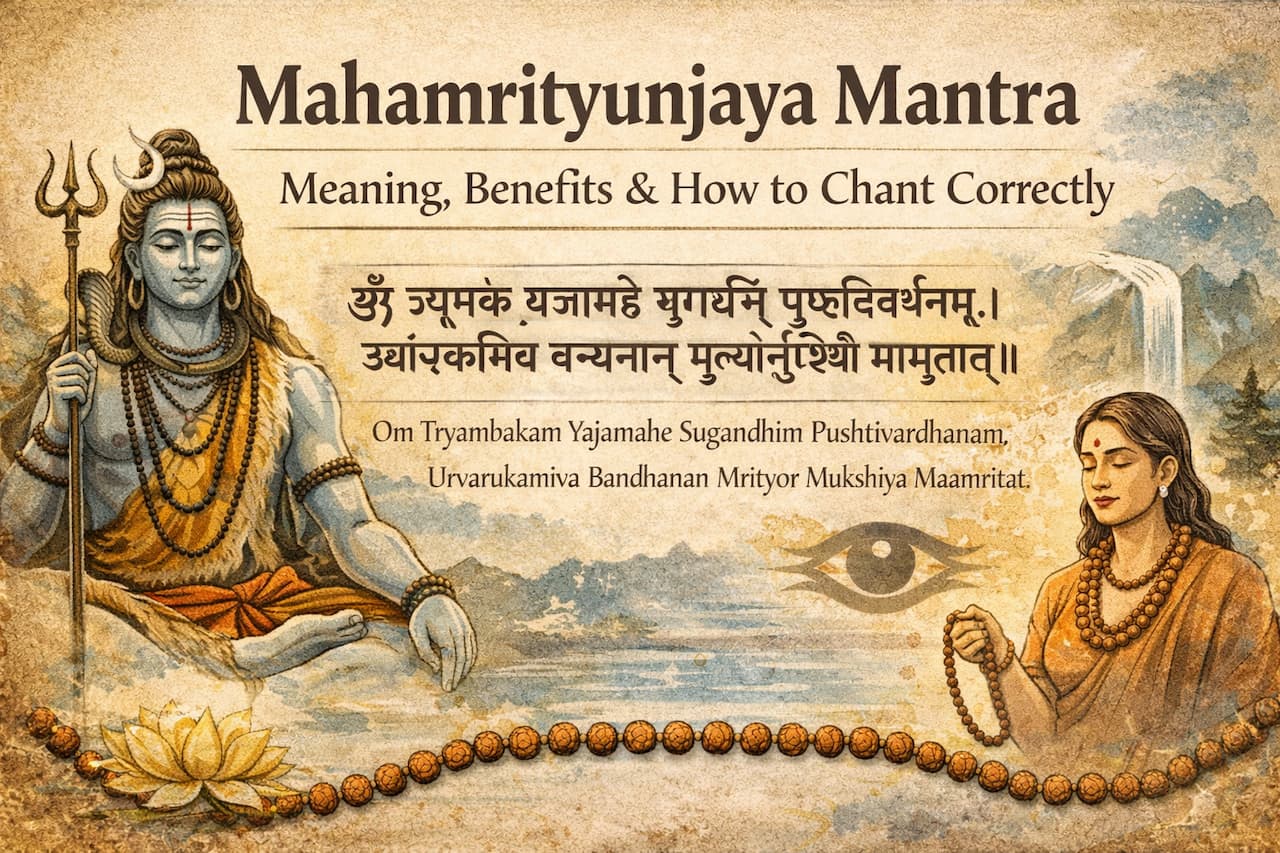
 Mahamrityunjay Mantra is one of the most powerful and sacred mantras dedicated to Lord Shiva. Known as the “Great Death-Conquering Mantra,” it has been chanted for thousands of years for healing, protection, inner peace, and spiritual growth. While many people understand its meaning and basic chanting method, fewer know how to integrate it deeply into daily life or use it as a long-term spiritual practice.
For most beginners, the Mahamrityunjay Mantra starts as a short prayer. But for regular practitioners, it gradually becomes a lifestyle tool that supports mental stability, emotional balance, and deeper awareness. When practiced correctly and consistently, it can transform not only your meditation sessions but also your everyday thoughts, reactions, and habits.
This guide explains how to move beyond basic chanting and integrate the Mahamrityunjay Mantra into daily life, meditation practices, and advanced spiritual routines in a simple and practical way.
Understanding the Deeper Purpose of Mahamrityunjay Mantra
The Mahamrityunjay Mantra is not only a prayer for protection or health. Its deeper purpose is inner transformation.
It helps shift the mind from:
- Fear → Courage
- Stress → Calmness
- Confusion → Clarity
- Attachment → Detachment
- Restlessness → Awareness
This is why advanced practitioners often say the Mahamrityunjay Mantra is less about “asking” and more about “becoming.”
How to Integrate Mahamrityunjay Mantra into Daily Life
One of the most powerful ways to benefit from the Mahamrityunjay Mantra is to make it part of your normal routine rather than a separate spiritual activity.
1. Morning Mind Reset Practice
Start your day with the Mahamrityunjay Mantra instead of immediately checking your phone.
A simple routine:
- Sit quietly for 2 minutes
- Take slow breaths
- Chant 11 times
- Set a positive intention for the day
This helps create emotional stability before external stress begins.
2. Stress-Response Chanting
Instead of reacting immediately during stressful situations, silently repeat the Mahamrityunjay Mantra.
This practice helps:
- Pause emotional reactions
- Reduce anxiety spikes
- Create mental distance from problems
- Improve decision-making
Even 30 seconds of mindful chanting can shift emotional state.
3. Night Relaxation Practice
Before sleeping, chanting the Mahamrityunjay Mantra can help release mental tension.
Suggested routine:
- Dim lights
- Sit or lie comfortably
- Chant slowly or listen softly
- Focus on breath
- Let go of thoughts
This can improve sleep quality and reduce overthinking.
Mahamrityunjay Mantra in Meditation Practice
The Mahamrityunjay Mantra can also be used as a meditation anchor.
Technique 1: Breath + Mantra Synchronization
- Inhale slowly
- Mentally repeat “Om Tryambakam”
- Exhale slowly
- Continue rhythmically
This synchronizes breath and sound, calming the nervous system.
Technique 2: Silent Mental Chanting
Instead of vocal chanting, repeat the Mahamrityunjay Mantra mentally.
This deepens concentration and reduces external distraction.
It is especially useful for:
- Advanced meditation
- Quiet environments
- Travel or busy spaces
Technique 3: Visualization Practice
While chanting, visualize:
- Soft golden light around the body
- Lord Shiva as a peaceful presence
- Release of fear and tension
This combines imagination with spiritual focus, improving emotional release.
Advanced Practice of Mahamrityunjay Mantra
Once you are comfortable with basic chanting, you can gradually deepen your practice.
1. Fixed Daily Sadhana
Choose a fixed time every day and maintain discipline.
Even 15–20 minutes daily is more effective than irregular long sessions.
2. Mala-Based Japa Practice
Using a 108-bead mala helps maintain rhythm and focus.
Benefits:
- Improves concentration
- Reduces distractions
- Builds consistency
- Deepens meditation state
3. Extended Chanting Sessions
Advanced practitioners sometimes increase chanting gradually:
- 108 repetitions daily
- 1 mala in morning + 1 in evening
- Special focus on Mondays
The key is gradual progression, not sudden intensity.
Mental Transformation Through Mahamrityunjay Mantra
With consistent practice, the Mahamrityunjay Mantra influences thought patterns.
1. Reduced Overthinking
The repetitive sound gives the mind a single anchor, reducing mental noise.
2. Emotional Awareness
You begin noticing emotions instead of reacting instantly.
3. Improved Patience
Regular chanting encourages a slower, calmer response to challenges.
4. Better Self-Control
You become more aware of impulsive reactions and gradually learn to pause before responding.
Common Challenges in Long-Term Practice
Even sincere practitioners face difficulties.
1. Lack of Consistency
Solution: Start small (11 chants daily) instead of aiming too high.
2. Mind Wandering
Solution: Gently bring attention back without frustration.
3. Loss of Interest
Solution: Change environment, timing, or combine with meditation.
4. Expecting Immediate Results
Solution: Focus on process rather than outcomes.
The Mahamrityunjay Mantra works gradually, not instantly.
Signs of Positive Progress
With regular practice, subtle changes appear:
- Calm reactions in stressful situations
- Less emotional overwhelm
- Improved sleep
- Reduced anxiety patterns
- Greater mental clarity
- Natural inclination toward positivity
These changes often happen slowly but steadily.
Mahamrityunjay Mantra as a Lifestyle Practice
At an advanced level, the Mahamrityunjay Mantra becomes more than chanting—it becomes a mindset.
You begin to:
- Pause before reacting
- Think more calmly
- Trust life’s flow more easily
- Feel less controlled by fear
- Stay emotionally balanced
This is where real transformation happens.
Conclusion
The Mahamrityunjay Mantra is not limited to ritual chanting or occasional prayer. When integrated into daily life and meditation practice, it becomes a powerful tool for mental clarity, emotional stability, and spiritual growth.
Whether you are a beginner chanting 11 times a day or an advanced practitioner using long meditation sessions, the key lies in consistency and awareness. Over time, the Mahamrityunjay Mantra helps reshape not just your thoughts during practice, but your entire approach to life.
It gently guides the mind from stress to calmness, from fear to courage, and from confusion to inner peace—making it one of the most meaningful spiritual practices for modern life.