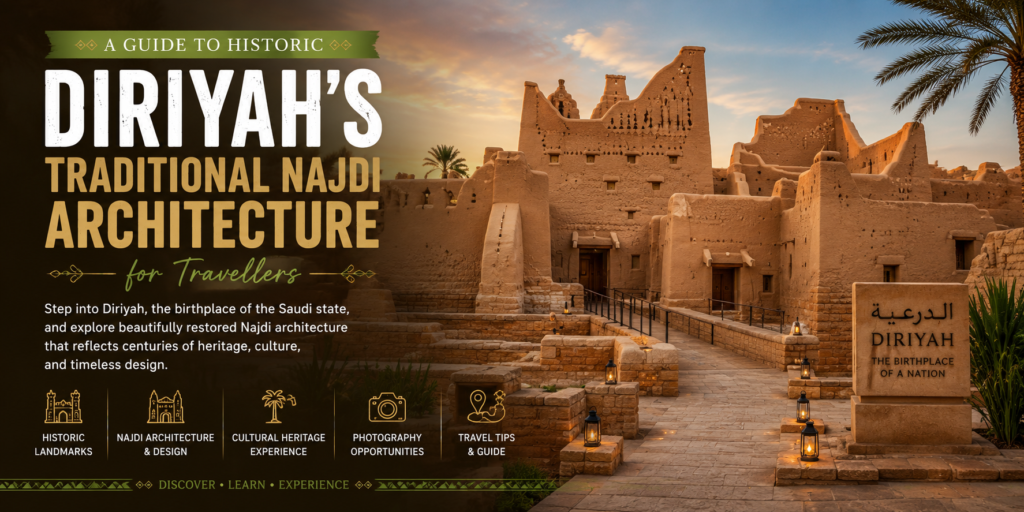
Stepping into Historic Diriyah feels like walking straight into the pages of an ancient storybook. Located just a short drive from the bustling heart of Riyadh, this UNESCO World Heritage site is the birthplace of the Saudi kingdom and the stunning epicenter of traditional Najdi architecture. If you are planning a journey to Saudi Arabia, exploring the sun-baked mud-brick alleyways of At-Turaif is an absolute must-do.
What is Najdi Architecture?
Najdi architecture is the traditional building style native to the Najd region of central Saudi Arabia. Born out of necessity and ingenuity, this architectural marvel is designed entirely to withstand the extreme desert climate. Builders relied heavily on locally sourced, natural materials—primarily sun-dried mud bricks, straw, and sturdy timber from local palm and tamarisk trees. Instead of glass windows, traditional Najdi homes feature triangular or rectangular ventilation openings that catch the desert breeze while keeping the harsh sunlight out. Thick, mud-rendered walls provide natural insulation, keeping interiors cool during scorching summer afternoons and surprisingly warm on chilly desert nights.Key Features to Look For When Exploring Diriyah
As you wander through the restored ruins and museums of At-Turaif, keep an eye out for these signature design elements that define Najdi heritage:- Mud-Brick Walls (Mudh): Built layer by layer on stone foundations, these textured walls showcase a rich, earthy palette that glows golden during sunrise and sunset.
- Triangle Openings (Al-Maseef): Often arranged in decorative rows, these small triangular niches and windows serve a dual purpose of ventilation and aesthetic charm.
- Wooden Doors and Windows: Intricately carved from palm wood and painted in vibrant primary colors—mostly blues, greens, and reds—these wooden accents provide a striking contrast against the neutral mud walls.
- Decorative Parapets: The top edges of the buildings feature triangular sawtooth or crenellated designs, which are not just decorative but also help channel rainwater away from the mud walls.